Amsterdam is a chemical "hotspot", where there are not only multiple industrial plants, but also many research centers. In this environment they are creating free tools which are very useful for process simulation.
Thanks to a post from Roberto Carrera in ingenieria quimica.org, we have found some interesting links.
CoLAN (CAPE-OPEN Laboratories Network) is an organization that promotes the use of open standards for process simulation software. This aims to facilitate the exchange of flowsheets, thermodynamic properties between different programs. Some members of this association include representatives of major companies like Shell, BP, Total, BASF, DOW and IFP.
COCO is a free simulation environment that uses CAPE-OPEN standards. It includes:
*Graphic interfaces for flowsheets.
*Thermodynamic database.
*Unit operations modules.
*Chemical reactor modules.
ChemSep: Free Software for multicomponent separations. It allows the user to calculate distillation columns, thermodynamic properties, etc. The LITE version is free, and there's a paid version with more options.
For the Spanish version of this blog, click here
Friday, July 24, 2009

Material Physical Properties
Evitherm's web page contains links to various databases of thermodynamic material properties,and also countless other chemical physical properties that may be of interest. Some of these are free.
For example, one of the databases is the material datacenter that contains information on plastics.
For the Spanish version of this blog, click here
For example, one of the databases is the material datacenter that contains information on plastics.
For the Spanish version of this blog, click here
Homemade supercomputer
 Professor Joel Adams and his student, Tim Brom of Calvin College, USA, announced that it is possible to build a high performing supercomputer for a really low price (less than $2500.)
The device is called Microwulf and consists of 4 multi-core processors connected by gigabyte ethernet. These are all elements whose price is always decreasing.
In order to test the performance, they used the
“high performance Linpack” benchmark, which yielded a result of a maximum 26 Gigaflops. (…...The most powerful supercomputer today reaches 280 Teraflops, a number approximately 10,000 times larger. While the proposed system is not the most powerful, in terms of Gflops per dollar or per KW it is very efficient.
For the Spanish version of this blog, click here
New periodic table
A new spiral shaped periodic table is the focus of some controversy. Allegedly it gives a clearer picture of the relationships among elements. On the other hand, it doesn't provide as much information as the classic chemical tables.
As for me I'll stick with Sargent Welch's, because it has atomic weights, etc.
Also note: Why do so many people create computer-based periodic tables? Paper ones are more useful.
In this link there are various PDF or GIF files for printing your own periodic table.
Also, there is a file in SVG format for those who would like to edit or personalize theirs.
For the Spanish version of this blog, click here
As for me I'll stick with Sargent Welch's, because it has atomic weights, etc.
Also note: Why do so many people create computer-based periodic tables? Paper ones are more useful.
In this link there are various PDF or GIF files for printing your own periodic table.
Also, there is a file in SVG format for those who would like to edit or personalize theirs.
For the Spanish version of this blog, click here
Candy Manufacturing
The Ferrara Pan candy factory offers a Virtual Tour, which shows different stages of the
manufacturing process of making hard candy known as "atomic fireballs." A series of
animated images shows the processing steps that go from raw materials to product packaging. It's not quite the same as a visit to the plant, but it really gives a feeling of what the industrial process looks like.
Hopefully other factories will do the same thing, to satisfy everyone curious about how things are made.
For the Spanish version of this blog, click here
manufacturing process of making hard candy known as "atomic fireballs." A series of
animated images shows the processing steps that go from raw materials to product packaging. It's not quite the same as a visit to the plant, but it really gives a feeling of what the industrial process looks like.
Hopefully other factories will do the same thing, to satisfy everyone curious about how things are made.
For the Spanish version of this blog, click here
Google Scholar Scientific search engine
Google Scholar , allows one to find scientific articles on the web.
One of its advantages is the speed and effectiveness that we have come to expect from Google. The results are listed by their relevance, giving priority to the most-cited articles, and at the same time awarding a greater score to the articles cited by those most cited.
One disadvantage is that many publications are not accessible full-text because they require a subscription. It's unlikely that it'll replace academic databases but it is nevertheless an interesting service that's free, and available to everyone.
For the Spanish version of this blog, click here
One of its advantages is the speed and effectiveness that we have come to expect from Google. The results are listed by their relevance, giving priority to the most-cited articles, and at the same time awarding a greater score to the articles cited by those most cited.
One disadvantage is that many publications are not accessible full-text because they require a subscription. It's unlikely that it'll replace academic databases but it is nevertheless an interesting service that's free, and available to everyone.
For the Spanish version of this blog, click here
Tuesday, July 14, 2009
Chemistry images
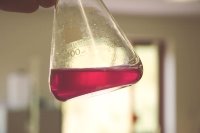
Good chemistry pictures can be found in wikimedia commons; Below are some chemistry and nanochemistry links:
a. Nanotechnology
b. Laboratory equipment
c. Chemistry
d. Chromatography
Most of the images have a GNU or Creative Commons license, which makes it easy to use or copy the pictures.
For the Spanish version of this blog, click here
Subscribe to:
Posts (Atom)

